Welcome to the Story Behind the Buttons
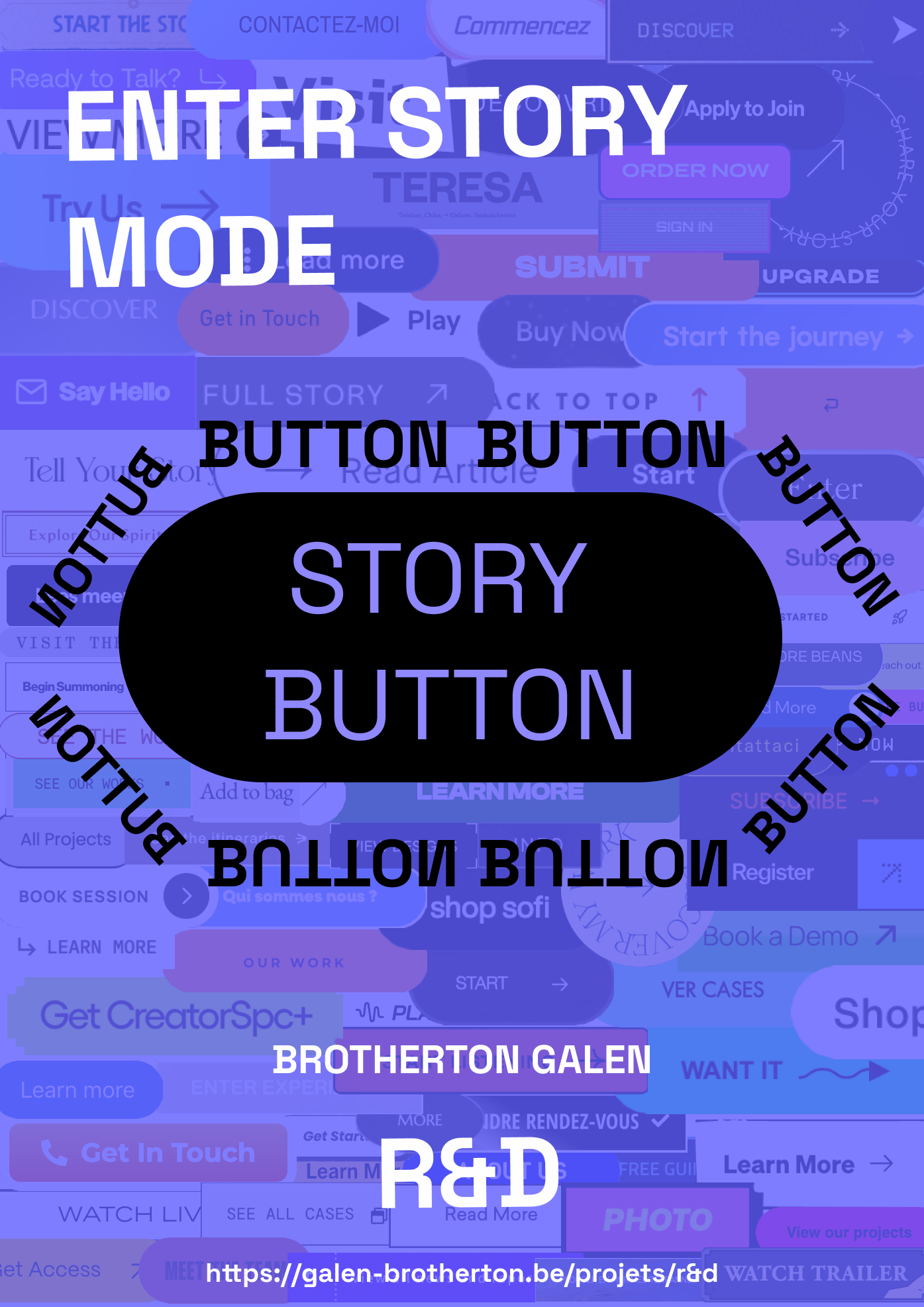
This project was born from my fascination with the intersection of user interface and visual storytelling. I was quickly captivated by the idea that the button that are the central object of UX embodies a micro imaginative scene, a distillation of style, intention, and narrative. Inspired by Bardelli’s reflections on subjectivity in graphic design, I wanted to explore how buttons already tell a story, long before they are clicked. Drawing on research in design, web history, and experimental practices, I set out to create a thoughtful collection of 100 buttons where each shape, color, or animation becomes a narrative vector.
The Button as a Memory Interface
Every button carries an implicit memory: the interfaces that came before it, and the familiar gestures users have learned over time. Through its shape, texture, or iconography, the button evokes cultural and technological habits. Some resemble physical switches, others mimic app icons or folder tabs. This collective memory shapes how a user anticipates interaction, turning the button into an emotional landmark as much as a functional element.
Form Already Tells a Story
A rectangular button with sharp corners might suggest efficiency, structure, or professionalism. In contrast, a fully rounded button feels softer, more human, even playful. In UI design, form becomes the first layer of visual storytelling, almost like tone of voice. This visual language allows the button to set a mood even before a single click.
Animation as a Narrative Signal
A button that gently pulses invites curiosity or exploration. One that briefly shakes suggests urgency or confirmation. These micro-animations, often viewed as decorative, are in fact powerful narrative signals, conveying the designer’s intent. They shape the tempo of the user journey, turning every interaction into a moment that feels dramatic, casual, mysterious, or immediate.
A Prototype as a Critical Tool
By developing a responsive grid and tag-based filter system, this project goes beyond being a visual gallery. It becomes a critical design tool, questioning how we interpret signs, why certain shapes resonate more than others. This prototype makes those questions visible, turning them into an exploratory and narrative interface — both a research object and a storytelling device.